Free-Flap Reconstruction · Volume II of 5
The Free Flap Toolkit
Translate donor anatomy into reconstructive options, comparing pedicles, tissue components, geometry, and donor-site tradeoffs across radial forearm, ALT, fibula, subscapular, DCIA, and selected rescue flaps.
Orientation
About this volume
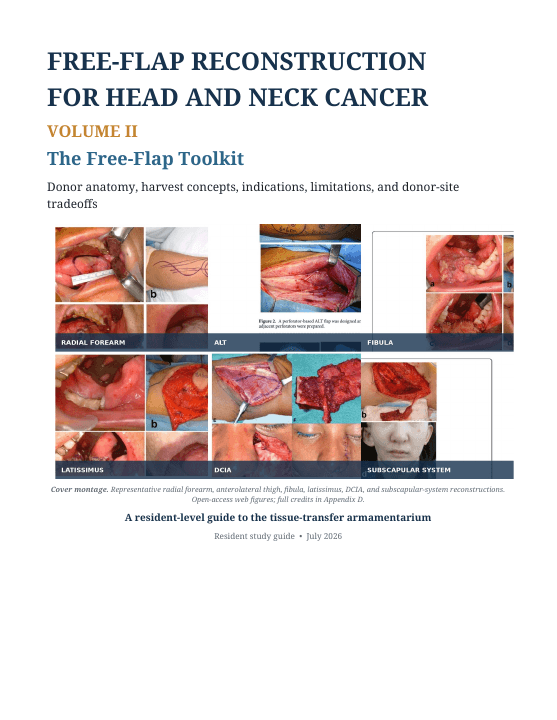
Volume II shifts from the defect audit to the donor-site side of the decision. It teaches residents to read a free flap as a vascular pedicle with specific skin, fascia, muscle, bone, and bowel components—not as a memorized answer to a diagnosis. Chapters compare radial forearm, ALT, fibula, subscapular, DCIA, and selected alternatives through perforator anatomy, tissue geometry, donor assessment, and morbidity. Tables and cases clarify why a fibula suits long osteotomy-heavy mandibular reconstruction, when subscapular tissue offers independent components, and why thin lining may favor radial forearm or a favorable ALT. This second volume supplies the toolkit that Volume III applies to individual defects, while reinforcing useful operative anticipation rather than independent technical instruction.
After completing this volume, the resident should be able to
- Compare the pedicle, tissue components, geometry, and donor-site tradeoffs of the major free flaps.
- Match flap characteristics to lining, bulk, bone, and multi-component reconstructive needs.
- Anticipate donor assessment and operative considerations when discussing flap options.
Reader
PDF preview
Preview before loading
The full PDF is loaded only when requested to keep this page fast, especially on mobile.