Vestibular System · Volume II of 3
Bedside Localization and Vestibular Testing
Turn a dizziness presentation into an anatomic hypothesis using timing, triggers, eye movements, positional testing, vestibular laboratory studies, and question-driven imaging.
Orientation
About this volume
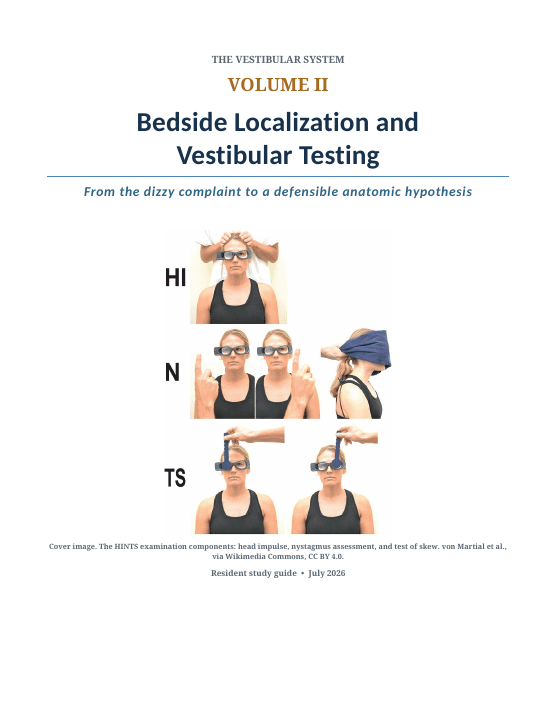
Volume II turns Volume I’s physiology into a practical diagnostic sequence. It starts with the temporal architecture of dizziness—triggered, spontaneous episodic, acute continuous, or chronic—then uses ocular motor findings, nystagmus vectors, head impulse, skew, positional maneuvers, hearing, gait, and dynamic vision to localize the problem. Residents learn when HINTS and HINTS+ apply, how Dix-Hallpike and roll testing map to canal mechanics, and what calorics, vHIT, rotary chair, VEMPs, and posturography actually test. Four integrated encounters show how to choose the next test or imaging study from the unresolved question. This middle volume is about localization, not disease labels; Volume III uses the same framework to diagnose and manage named vestibular syndromes.
After completing this volume, the resident should be able to
- Classify dizziness by timing and triggers before choosing a localization pathway.
- Interpret eye movements, head impulse, skew, positional maneuvers, hearing, and gait as an anatomic pattern.
- Select vestibular testing or imaging according to the specific unresolved diagnostic question.
Reader
PDF preview
Preview before loading
The full PDF is loaded only when requested to keep this page fast, especially on mobile.